
I spent a few weekends this spring looking into window film for my own house, and here’s the short version: for UV and fade protection, privacy, and glass retention, it’s worth doing. For energy savings, it’s a real maybe that depends on your climate and the film you pick. And there are three drawbacks nobody selling you film wants to dwell on.
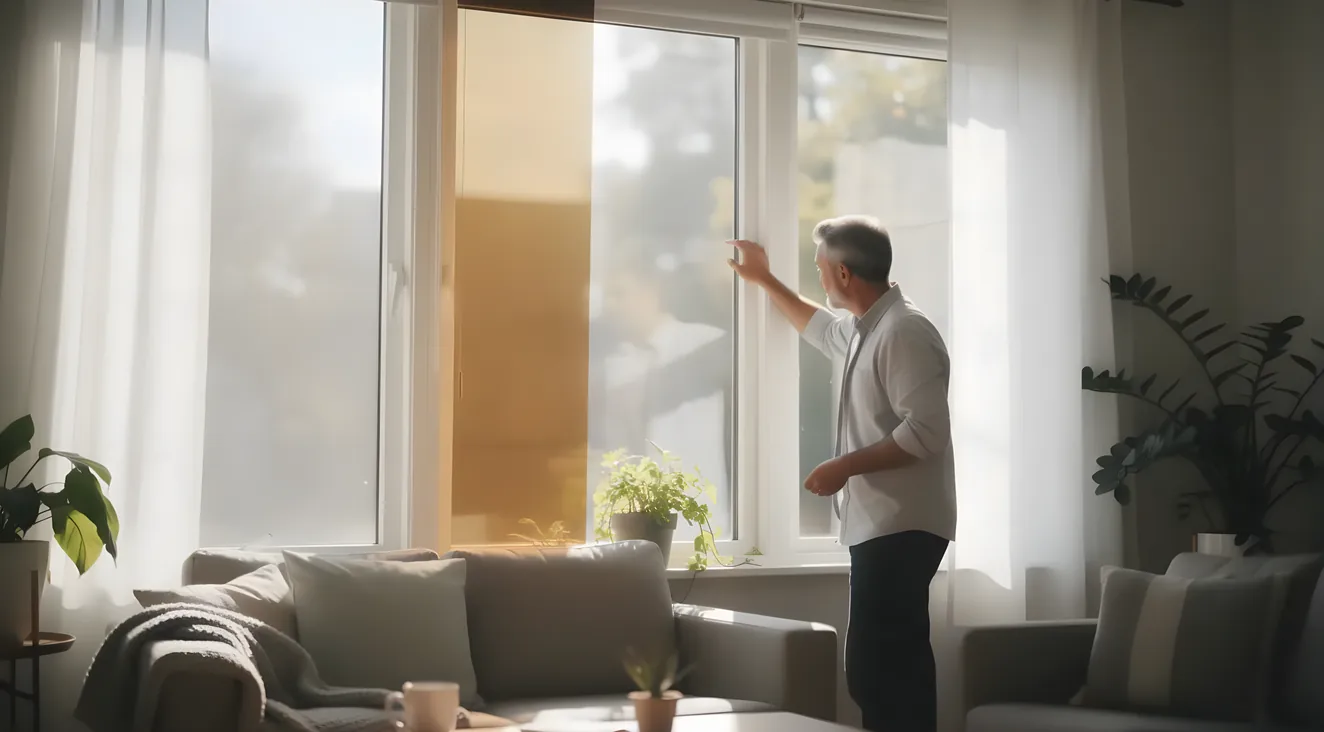
The pros that hold up: film blocks the UV rays that fade your skin and your furniture, it gives daytime privacy without blacking out a room, and a broken window covered in film tends to crack and stay in the frame instead of scattering across the floor. The cons: some manufacturers call your glass warranty void on aftermarket film over double-pane glass, application around frames and hardware is harder than it looks, and the wrong film in a cold climate blocks winter sun you actually wanted.
Window tinting isn’t one product with one effect. It’s five different jobs (UV protection, energy control, privacy, decoration, security), and most “cons” are really just the wrong film picked for the wrong job. Below is what film does and where it falls short. For how dark to go, how long it lasts, and how to install it yourself, I’ve linked to the pages that cover those specifically.
What Window Film Actually Does to Your Glass
Residential window film is a thin polyester laminate, glued to the inside face of your glass after the window’s already installed. It’s not baked into the glass, and it’s not a spray-on coating. Sunlight carries three things through a window: UV radiation, visible light, and infrared heat. Plain glass barely slows the UV and does little to stop the infrared, which is why an untreated window lets in glare, fading, and heat right along with the daylight you want.
A film’s performance comes down to three separate numbers:
- How much UV it blocks
- How much infrared heat it rejects
- How much visible light it lets through, which is what makes a film look light or dark
A film can reject nearly all the UV and still look almost clear. That’s why “pros and cons” isn’t one universal answer. How light or dark to go for your own windows is a separate decision, and I’m not covering it here.
UV Protection and What the Skin Cancer Foundation Actually Says
UV protection is the best-documented benefit of window film, and the Skin Cancer Foundation citation is worth getting right instead of overselling. The Skin Cancer Foundation runs a Seal of Recommendation program for window film: to earn it, a manufacturer submits independent lab testing showing the film blocks 99 percent or more of UVA and UVB radiation. Some Seal-qualified films block up to 99.9 percent.
That’s UV-blocking performance, not a skin-cancer-prevention claim. The Skin Cancer Foundation lists window film as one layer of sun protection alongside sunscreen, shade, and protective clothing, and it does not say filmed windows prevent skin cancer. What it does mean: less UV hitting your skin through a sunny window, and less UV-driven fading of furniture and flooring, which I’ll get to below. The Foundation explains this on their own site.
What the Seal of Recommendation Actually Covers
What it certifies
Independent lab testing showing 99% or more of UVA and UVB blocked. Some Seal-qualified films reach 99.9%.
What it does not claim
That filmed windows prevent skin cancer. The Foundation lists film as one layer of protection, alongside sunscreen, shade, and clothing, not a substitute for any of them.
Energy Efficiency: The Real Numbers vs. Replacing Your Windows
If your windows are old and drafty, film is a genuinely cheaper move than replacing them. The U.S. Department of Energy (DOE) has real numbers here: about 25 to 30 percent of a home’s heating and cooling energy use comes from heat gain and loss through the windows, and in cooling season, roughly 76 percent of the sunlight hitting a standard double-pane window enters the house and becomes heat.
Film doesn’t undo total heat gain and loss on its own, and it doesn’t replace a drafty window. It cuts the heat-gain side of that equation, which is what a solar-control film is built to do. I’d steer clear of any claim promising “up to 40 percent” off your bill, or that “half your heating and cooling” escapes through your glass. Those trace back to trade-association marketing, not the DOE, and I couldn’t verify them independently. The DOE figures above are the ones I trust, and the National Fenestration Rating Council (NFRC) rates window energy performance, film included, for a standardized comparison.
DOE Numbers vs. the Marketing Numbers
What the DOE says
25 to 30 percent of a home's heating and cooling energy use is lost through the windows. In cooling season, about 76 percent of the sunlight hitting a standard double-pane window becomes heat indoors.
What to ignore
"Up to 40 percent off your bill" and "half your heating and cooling escapes through your glass." Both trace to trade-association marketing, not the DOE, and neither checks out independently.
Keeping Heat In, Not Just Out: Window Film in Winter
Here’s what surprised me: film doesn’t only work one direction. A low-E (low-emissivity) film can reflect indoor heat back into a room in winter, cutting heat loss, while still letting the sun’s warmth in during the day.
The catch: a solar-control film built to reject hot-climate heat gain does that job year-round, including winter, when a south-facing window’s sunlight is free heat you actually want. Put a heat-rejecting film there and you’ve blocked your own passive solar heating along with the summer glare you were fixing. Whether film helps in winter comes down to your climate zone and your window’s compass orientation, not a flat yes-or-no.
Privacy Without Losing the View
Two different products get sold as “privacy film,” and they don’t work the same way. Frosted or diffusing film scatters the light passing through it instead of transmitting a clear image, and it works day or night, in any room.
One-way or mirror film relies on the outside being brighter than the inside. During the day, that difference means people outside see a reflection instead of a clear view in. At night, with your lights on, that flips: anyone outside can see straight into a lit room, the same as through plain glass, unless paired with curtains or blinds. If you want privacy after dark, frosted film is the one that actually delivers it.
Frosted vs. One-Way Film, at a Glance
Frosted / diffusing
Scatters light instead of transmitting an image. Works the same day or night, in any room.
One-way / mirror
Blocks the view in only while it's brighter outside than in. Once your lights are on after dark, that reverses and it works like plain glass.
Decorative Film: Frosted, Etched, and Stained-Glass Looks
Decorative film is a cosmetic option, not a functional fix. Patterns that mimic stained glass, sandblasted or etched glass, textured rain-glass, or a band of frosting at eye level are all available, and unlike real etched or stained glass, the film comes off cleanly if you change your mind.
Decorative doesn’t mean giving up UV protection. Plenty of decorative films carry the same UV-blocking base layer as a plain functional film, so a pattern for a bathroom or front door doesn’t automatically trade away fade protection.
Security, Broken Glass, and Fading Furniture
Security film is a thicker version of the same polyester laminate, built for glass retention. When a window with security film breaks, the film holds the fragments together so the glass tends to crack and stay in the frame instead of scattering into loose shards, a real benefit for kids’ rooms or ground-floor windows.
Being honest about the limit: security film isn’t bulletproof and doesn’t stop someone from getting in. It slows entry and cuts the risk of a flying-glass injury, and that’s the whole claim.
Furniture and flooring fade from UV, visible light, and heat, not UV alone, so a film that only blocks UV protects against part of that problem, not the whole thing.
The Real Cons Nobody Sells You On
Warranty voiding on double-pane glass. Some window manufacturers state outright that aftermarket film voids the glass warranty unless it’s pre-approved or installed by an authorized dealer. The reasoning: a dark or reflective film raises the temperature of the glass and gas fill inside a sealed double-pane unit (an insulated glass unit, or IGU), and manufacturers point to that heat rise as a stress factor that can, over years, contribute to the seal breaking down (the foggy double-pane window you’ve probably seen on an older house). This is genuinely disputed: film companies argue it’s never been proven, and that a properly installed film performs no differently than bare glass. Check your window manufacturer’s warranty language before applying anything, especially on newer windows still under warranty.
DIY difficulty around frames and hardware. The film itself isn’t hard to buy or cut. The edge is what’s hard: trimming right up to the frame without falling short or lapping onto it is one of the most common places a DIY job goes visibly wrong. Latches, cranks, and sash locks all have to be worked around, and curved or bay windows are a different level of difficult. Flat, accessible, small-to-medium windows are realistic DIY. A big picture window or custom glass is a lot less forgiving.
Choosing the wrong film for a cold climate. I covered the mechanism above, but it belongs here as its own line item: a solar-control film picked for hot-climate performance blocks winter sun you wanted too, working against your own energy goals depending on climate and orientation, not as a universal rule.
The Three Cons, at a Glance
Warranty risk
Some manufacturers void the glass warranty on aftermarket film over double-pane windows unless it's pre-approved.
DIY difficulty
The edges around frames and hardware, not the film itself, are where a DIY job usually goes wrong.
Wrong film, cold climate
A film picked for hot-climate heat rejection blocks winter sun year-round, working against you in cold months.
Where to Go From Here
Everything above is about whether tinting your house windows is worth doing at all. The four pages below are where you figure out which film, how long it holds up, and whether you can put it on yourself.
I didn’t cover how light or dark to go, on purpose. That’s its own decision, laid out in choosing a tint level.
The warranty and durability questions above lead to an honest next question: how long a given film actually holds up. I answered that separately, with real numbers, in how long window film actually lasts.
If the frame and hardware difficulty has you leaning toward DIY anyway, the actual step-by-step is in installing it yourself.
One more question: if you’ve got plants living in a window you’re thinking about tinting, that’s its own topic, and I cover it in what it does to houseplants near a window.
FAQ Section
Is it worth it to tint your house windows?
For UV blocking, fade protection, and privacy, yes, and those benefits are well documented. Energy savings alone depends on your climate and film choice, so don’t commit based on a bill-savings promise alone.
Why don’t people tint their house windows?
Usually one of three reasons: worry about voiding a window warranty, DIY work around frames and hardware being harder than expected, or not wanting to lose winter sunlight in a cold climate.
Can you see through tinted house windows at night?
It depends on the film. Frosted film keeps its privacy effect around the clock. Mirror or one-way film only blocks the view in during daylight, and that reverses once it’s dark and your lights are on.
What are common mistakes to avoid with window film?
Buying a film built for the wrong job (heat-rejecting film in a cold climate, or one-way film expected to work at night), and rushing the frame and hardware work. The full mistake list is on the installation page above.
What are the drawbacks of window film?
Possible warranty issues on double-pane glass, a harder-than-expected DIY job around frames and hardware, and a film that blocks winter sun you wanted in a cold climate. Weigh them against the benefits before buying.