
Window film typically lasts 10 to 20 years when it’s quality film installed correctly, and the honest answer to “how long will mine last” depends far more on which type you have than anything else. Dyed film sits at the low end of that range, metallized or carbon film sits in the middle, and ceramic film sits at the top, with documented cases running well past 25 years.
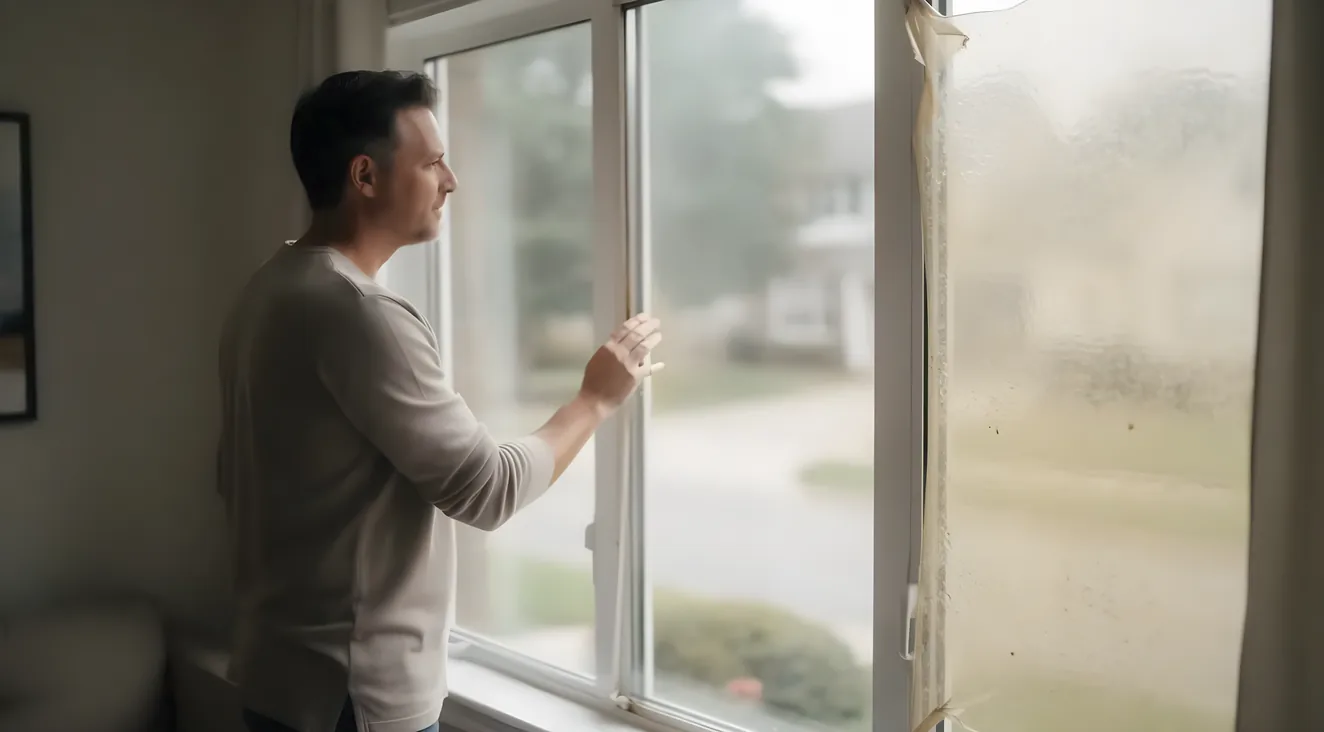
Film degrades because something inside it breaks down: dye molecules fade under UV exposure, a metal layer slowly oxidizes, or the adhesive fatigues from repeated heat cycling. Which of those applies to you depends on which film you bought. Climate, orientation, and installation quality shift a film up or down within its tier; they don’t change which tier it’s in. A warranty is a different number from how long the film will actually look good, and I get into that below.
I went looking for this exact number after noticing every site I checked gave a different answer, and once I dug into the manufacturer and trade data, I understood why: each one was quietly describing a different film tier without saying so.
If you’re still deciding whether to tint at all, the full case for and against tinting your windows covers that question.
Window Film Lifespan by Type (Dyed, Metallized, Ceramic)
These ranges come from manufacturer and trade data that converge on similar numbers, not one controlled study, so treat them as a real range with real variance, not a guaranteed countdown.
| Film Type | Typical Lifespan | How It Fails |
|---|---|---|
| Dyed | 5-10 years (2-3 years on west- or south-facing glass in a hot climate) | Dye molecules absorb light directly; UV exposure breaks those bonds over time |
| Metallized / carbon | 10-15 years | Reflects heat instead of absorbing it; the metal layer can slowly oxidize over long timeframes |
| Ceramic (nanoceramic) | 15-20+ years, with cases documented past 25 | Non-metallic, non-conductive particles carry neither dye’s UV liability nor metal’s oxidation liability |
Dyed film is the cheapest option, and the one most likely to disappoint you if you expected ceramic-level performance. It absorbs light through dye molecules, which are chemically fragile: UV exposure gradually breaks the bonds that give the dye its color. That’s chemistry, not a defect, and it’s why dyed film is the tier that visibly changes color while the others mostly don’t. Metallized film sidesteps that by reflecting heat and light instead of absorbing them; its own slow failure mode is oxidation of the metal layer, a much longer process than dye photodegradation. Ceramic film avoids both liabilities by using particles that are neither dye nor metal, the real reason it holds up longest.
What Actually Shortens or Extends That Range
Film type sets the tier. Climate, compass orientation, and installation quality decide where in that tier a specific window lands, and most sources treat those three as separate footnotes instead of connecting them. West-facing dyed film in a hot climate sits near the bottom of its range; north-facing ceramic film in a mild climate sits near the top of its own.
If Your Windows Face West or South
In a hot climate, plan on the low end of your film's lifespan range, not the middle. That's the glass that takes the most direct sun, and it's the first place bubbling and purpling tend to show up.
West- and south-facing glass takes the most direct sun, and in hot climates it can age noticeably faster than north-facing glass, sometimes described as roughly twice as fast (a directional, single-source estimate, not a verified ratio). Heat is the real driver: it speeds up dye breakdown and fatigues the adhesive through repeated expansion and contraction, creating the tiny voids that later show up as bubbling. How dark your film is is a related but separate question, since darkness level and lifespan get conflated but aren’t the same tradeoff.
Installation quality gets skipped most often, and it deserves equal billing with climate. Contamination under the film, poor tension during application, or rushed edge prep causes edge lifting and bubbling that has nothing to do with the film itself, and it can show up years before the film would otherwise fail. If you’re installing film yourself, how to install it without introducing the contamination and tension problems that cause early bubbling is worth reading first, since a bad install can knock years off even the best film.
Warranty Length Isn’t the Same Number as Actual Lifespan
Warranty length and actual lifespan get treated as interchangeable, and they aren’t. Commercial film installations typically carry warranties in the 10 to 15 year range, cross-confirmed across 3M, LLumar, and Solar Gard warranty documentation. Residential installations are often sold with a lifetime warranty instead, tied to the original owner-occupant, non-transferable, and it won’t follow the film to a rental property or a new owner.
Buying a House With Tinted Windows?
Most residential film warranties are tied to the original owner-occupant and don't transfer. If you're buying a home with tinted windows or renting one out, don't assume any warranty on that film still applies to you.
A warranty is a manufacturer’s guarantee floor, not a forecast of how the film will actually look. Manufacturer and trade data converge on a simple pattern: cheaper film can fail inside a modest warranty window on the wrong glass in a harsh climate, while premium ceramic film routinely outlives a generous warranty when conditions are favorable.
What Failing Film Looks Like
Two symptoms come from the film itself, and a third comes from the install. Purpling, where the film shifts toward a pinkish or purple tone, is the visible signature of dye breaking down. Dyed film uses a mix of color components, and the green and yellow ones fade faster than the red and blue ones, so what’s left skews purple. It’s the same photodegradation mechanism described above, just visible instead of theoretical.
Bubbling and rippling are almost always adhesive-related: air or moisture trapped under the film, usually from heat-driven adhesive fatigue over time or from a poor original install that never fully cured. That ties directly back to the installation-quality point above, since a rushed application is often where this starts.
Edge lifting, where the film peels up at the corners or seams, is worth flagging separately because it’s frequently an installation defect rather than a chemistry failure, and it can show up on film nowhere near the end of its life. If your film is bubbling or purpling, that’s aging or a failed install, not something to wait out, and it’s the combination I check for first when either symptom shows up on my own windows. If it’s just a little duller than when it went on, that’s normal.
Failing Film, At a Glance
Purpling
Dye breaking down. Pinkish or purple cast.
Bubbling or rippling
Air or moisture trapped under the adhesive.
Edge lifting
Peeling at corners or seams, usually an install defect.
Frequently Asked Questions
How often should window film be replaced?
Replacement timing follows the tier your film is in. Dyed film wears out soonest, commonly in the 5 to 10 year window and sooner on hot west- or south-facing glass. Ceramic film goes the longest between replacements, often 15 to 20 years or more before it’s worth swapping.
What is the typical lifespan of window film?
The typical range is 10 to 20 years, though where you land inside it comes down mainly to film type: dyed toward the bottom of the range, ceramic toward the top.
What is the warranty period for 3M window film?
3M’s residential lines are commonly sold with a limited lifetime warranty, while commercial sun-control and security lines typically carry a 10 to 15 year warranty.
Does a window film warranty transfer to a new homeowner?
Usually not. Residential film warranties are typically written to the original owner-occupant and don’t carry over when the house changes hands, so a “lifetime” warranty on paper doesn’t mean lifetime-of-the-house. If you’re buying a home with tinted windows, treat the film’s real condition, not its paperwork, as what matters: check for purpling or bubbling yourself rather than assuming coverage follows the deed. If you’re selling, mentioning the film’s age and type is more useful to a buyer than mentioning the warranty.